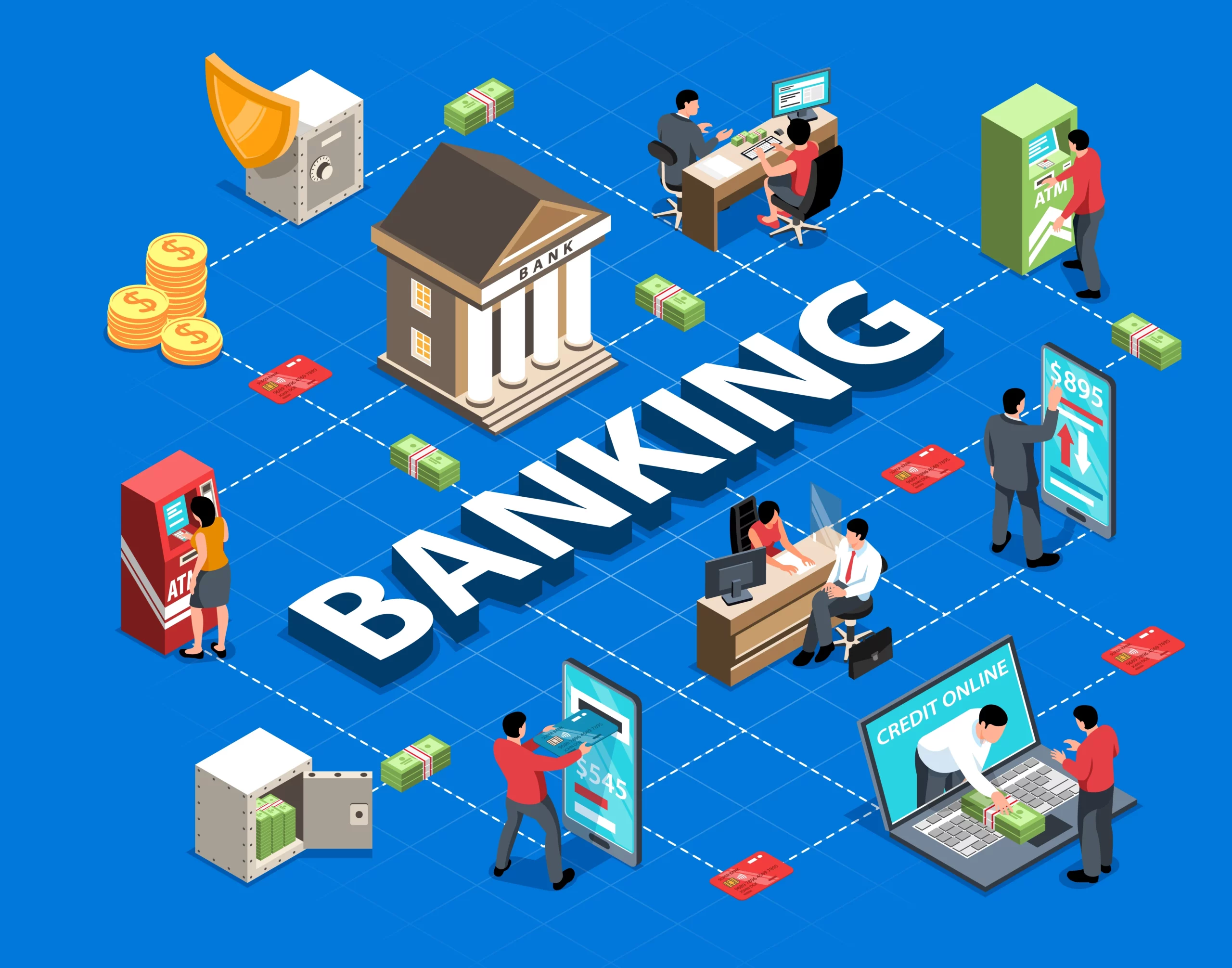


Banks are part of everyday financial life. Salaries are deposited into bank accounts, bills are paid through them, savings are stored there, and loans are often used to manage larger expenses.
These familiar activities are supported by a system that allows individuals and businesses to store money, make payments, borrow funds, and manage their finances. Understanding how banking works can make it easier to compare accounts, understand fees, and choose services that suit different financial needs.
What Is a Bank?
Banking involves providing financial services through banks and other financial institutions.
Common banking services include:
- Savings and checking accounts
- Money transfers and bill payments
- Credit and debit card services
- Personal and business loans
- Home loans or mortgages
- Fixed or term deposits
- Foreign currency services
- Mobile and internet banking
The exact services, rules, and account requirements vary between countries and financial institutions.
Types of Bank Accounts
The right bank account depends largely on how the money will be used.
Checking Accounts
Checking accounts are generally designed for everyday transactions. They can be used to receive income, pay for goods and services, transfer money, and manage regular expenses.
Savings Accounts
Savings accounts are designed to hold money over a period of time and may earn interest. They can be useful for setting aside funds for future expenses or building savings.
Fixed or Term Deposits
Fixed or term deposits generally involve keeping money with a bank for a specific period in exchange for an agreed interest rate or return, depending on the product and local rules.
Some accounts may have restrictions or penalties for early withdrawals, so the terms should be reviewed before opening an account.
How Banks Lend Money
Banks also provide loans to individuals and businesses.
Common types of loans include:
- Personal loans
- Home loans or mortgages
- Auto loans
- Student loans
- Business loans
Before approving a loan, a bank may consider income, existing debt, credit history, repayment ability, and other eligibility requirements.
The cost of borrowing can include interest, processing fees, penalties, and other charges.
Understanding Interest Rates
Interest is an important part of banking.
Savings products may pay interest on deposited money, while borrowed money is generally subject to interest charges.
Interest rates can be:
- Fixed
- Variable
- Linked to a benchmark or reference rate
A lower loan interest rate can reduce borrowing costs, while higher deposit rates can increase the interest earned on savings. However, the complete terms and fees should be considered rather than focusing only on the interest rate.
Online and Mobile Banking
Many banking services are now available through websites and mobile applications.
Digital banking can allow account holders to:
- Check balances and transactions
- Transfer money
- Make payments
- Confirm transactions
- Manage funds
- Control cards
- Receive account notifications
Digital convenience also makes security important. Strong passwords, multi-factor authentication, updated devices, and caution when handling suspicious messages can help reduce the risk of unauthorized access.
Bank Fees to Watch
Banking fees vary depending on the account and service.
Common charges may include:
- Monthly account fees
- ATM fees
- Transfer charges
- Overdraft fees
- Foreign exchange charges
- Loan processing fees
- Early withdrawal penalties
An account that appears inexpensive at first can become more costly when regular fees are added. Reviewing the complete fee schedule provides a clearer picture of the actual cost.

Deposits and Financial Protection
Many countries have deposit protection schemes that protect eligible deposits if a covered financial institution fails.
Protection limits, eligible accounts, and conditions vary from country to country. Checking which deposit insurance or protection scheme applies can be an important consideration when choosing where to keep savings.
Choosing Banking Services Carefully
Different financial situations require different banking products.
Before opening an account or taking a loan, consider:
- Interest rates
- Fees and charges
- Minimum balance requirements
- Withdrawal restrictions
- Loan repayment terms
- Digital banking features
- Customer support
- Deposit protection
- Branch and ATM availability
The cheapest or most expensive option is not necessarily the best choice. The overall terms and purpose of the account are equally important.
Conclusion
Banking plays an essential role in managing money, making payments, saving, borrowing, and handling everyday financial responsibilities.
Understanding account types, interest rates, loan terms, fees, digital security, and deposit protection can make banking decisions more informed and easier to manage.
Banking needs may change as income, expenses, savings goals, and financial responsibilities change. Regularly reviewing banking products can help identify unnecessary costs and services that may no longer fit current financial needs.